
Knowledge Sharing

What is Implicit Bias and How Does it Work?

Implicit bias refers to the attitudes or stereotypes that affect our understanding, actions, and decisions in an unconscious or automatic way. It’s the kind of bias that we may not even be aware of, yet it can have significant impacts on individuals and communities.
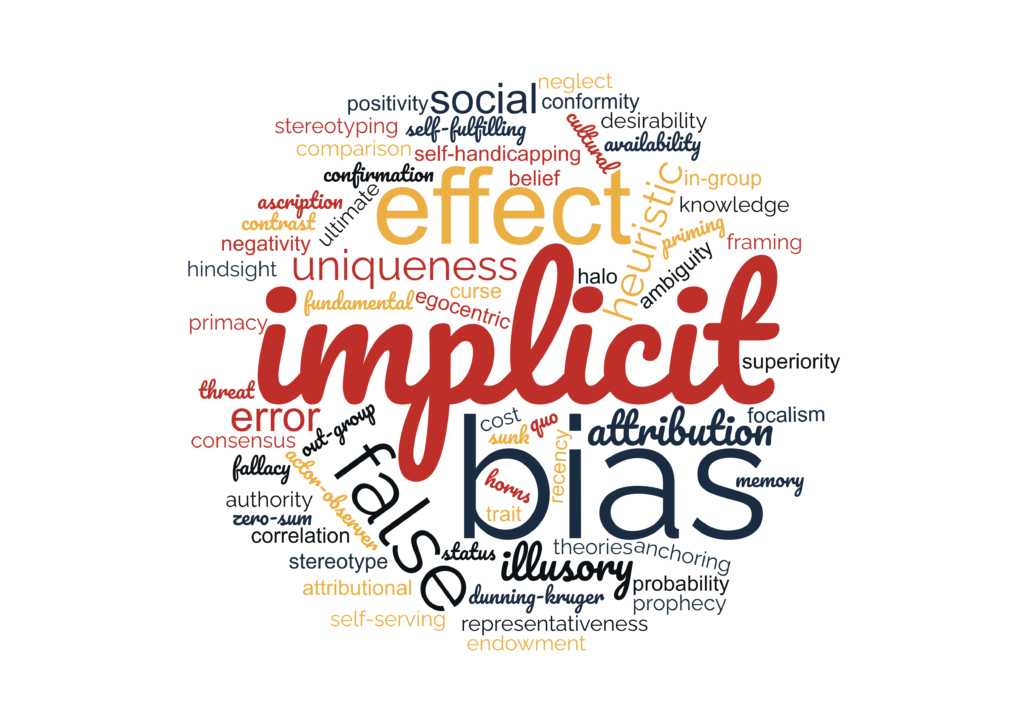
What is Implicit Bias and How Does it Work

Here are five components of implicit bias that help to shed light on this complex and important issue:

  1. Automatic and Unconscious: Implicit bias operates on an automatic and unconscious level. This means that we may not be aware of the biases we hold, and they can influence our behavior and decision-making without our conscious awareness. For example, we may make assumptions about someone’s abilities based on their race or gender, without realizing that we are doing so.
  2. Learned and Socialized: Implicit biases are shaped by our socialization and the cultural norms and values that we are exposed to. We may internalize stereotypes or prejudices based on messages we receive from the media, our families, or our peers. This can happen even if we consciously reject those messages, highlighting the importance of ongoing self-reflection and education.
  3. Impactful and Widespread: Implicit biases can have significant impacts on individuals and communities. For example, they can affect hiring decisions, treatment by law enforcement, or access to healthcare. They can also perpetuate systemic inequalities and contribute to broader patterns of discrimination and oppression. Recognizing the pervasive nature of implicit bias underscores the need for intentional efforts to mitigate its effects.
  4. Malleable and Changeable: While implicit biases can be deeply ingrained, research suggests that they are also malleable and can be changed through deliberate efforts. This could include exposure to counter-stereotypical information, practicing perspective-taking, or implementing policies and practices that reduce the likelihood of implicit bias impacting decision-making. This recognition of the potential for change can be empowering and motivating for individuals and organizations committed to addressing bias and promoting equity.
  5. Multidimensional and Complex: Implicit biases are not one-dimensional and can manifest in different ways depending on a range of factors, including the context, the individual, and the target of the bias. For example, biases related to race may differ from biases related to gender or sexual orientation. Additionally, individuals can hold multiple and conflicting biases at the same time. Understanding the complexity and nuances of implicit bias can help us to approach the issue with greater nuance and sophistication.

One way that organizations can work to mitigate the effects of implicit bias is by putting business processes and enterprise architecture in place. This includes developing policies and procedures that are designed to minimize the influence of bias in decision-making, such as blind hiring processes that remove identifying information from resumes. Enterprise architecture can also be used to identify and address biases in the technology systems that organizations use, such as algorithms that may inadvertently perpetuate discriminatory patterns.

By integrating business processes and enterprise architecture that are designed to minimize the impact of implicit bias, organizations can promote more equitable decision-making and create a more inclusive and diverse workplace. This can lead to better outcomes for both employees and customers, as well as improving the overall reputation and success of the organization.

Recognizing and addressing implicit bias is an important part of creating a more just and equitable society. By understanding the automatic and unconscious ways in which bias can impact our behavior and decision-making, we can work to reduce its influence and promote more fair and objective decision-making. With the implementation of business processes and enterprise architecture, organizations can take concrete steps towards reducing the impact of implicit bias in their operations, and promoting more equitable outcomes for all.

Ostrich Bias

The ostrich bias, also known as the ostrich effect, is a common tendency among individuals and organizations to ignore negative or threatening information. In business, the ostrich bias can have a significant impact on decision-making, risk management, and overall organizational performance.

For example, in business management, leaders may avoid negative feedback or warning signs about potential risks or problems. This can lead to a lack of preparedness and an inability to address problems before they become too large to handle. In supply chain management, the ostrich bias can cause businesses to overlook critical supply chain risks, such as disruptions in transportation, logistics, or manufacturing. This can result in delays, increased costs, and lost revenue.

However, the ostrich bias can be addressed through optimization techniques that allow businesses to identify and address potential risks and challenges. For instance, businesses can use predictive analytics to identify areas of potential supply chain disruption, and develop contingency plans to address them. Optimization techniques such as the Dolphin Swarm Algorithm (DSA) can be used to optimize supply chain operations, such as inventory management and transportation routing, to reduce costs and improve efficiency.

In addition, businesses can also utilize optimization techniques to address the ostrich bias in decision-making. By using tools such as decision trees and scenario analysis, businesses can consider a range of potential outcomes and risks, and develop strategies to mitigate them. These tools can also help businesses learn from past mistakes and develop more effective risk management strategies.

In conclusion, the ostrich bias can have a significant impact on business processes and management. However, by utilizing optimization techniques such as predictive analytics and the DSA, businesses can identify and address potential risks and challenges, and develop effective strategies to overcome the ostrich bias. By doing so, businesses can improve their decision-making, reduce costs, and become more resilient in the face of challenges.

Dolphin Swarm Algorithm

As businesses continue to face complex optimization problems, finding the right solution becomes increasingly important for improving efficiency and profitability. One potential solution that has gained attention in recent years is the Dolphin Swarm Algorithm (DSA), a metaheuristic optimization algorithm inspired by the social behavior and hunting strategies of dolphins.

The DSA is particularly useful in solving complex optimization problems that involve a large number of variables, such as resource allocation, scheduling, and manufacturing process optimization. Unlike traditional optimization techniques, which may rely on heuristics or simple rules, the DSA is able to find optimal solutions through a process of exploration, convergence, and exploitation, based on the collective behavior of a group of virtual dolphins.

One area where the DSA has shown promise in business is in supply chain management. In this context, the DSA can help optimize the allocation of resources, such as inventory, transportation, and storage, to minimize costs and improve delivery times. By modeling the social behavior of dolphins, which are known for their efficient communication and coordinated hunting strategies, the DSA can identify the most efficient routes, shipping modes, and warehouse locations for a given supply chain.

Another area where the DSA has been applied in business is in stock price prediction. By analyzing historical market data and using the DSA to model future trends, businesses can make more informed investment decisions and mitigate risks. The DSA has been shown to outperform other optimization algorithms in this context, offering more accurate predictions and higher returns on investment.

The DSA has also been applied in the manufacturing industry, where it can optimize the parameters of complex manufacturing processes, such as welding and machining. By modeling the collective behavior of dolphins, which are known for their efficient hunting strategies, the DSA can identify the optimal combination of parameters, such as temperature, pressure, and speed, to produce high-quality products with minimal waste.

As a baseline, the Dolphin Swarm Algorithm offers a powerful tool for optimizing complex business operations. By modeling the social behavior of dolphins, the DSA can help businesses improve their supply chain management, stock price prediction, and manufacturing processes, among other applications. As the algorithm continues to evolve and improve, it is likely to play an increasingly important role in helping businesses stay competitive in today’s fast-paced marketplace.